
What Should Restaurants Look for in Stain-Resistant Chair Upholstery?
Restaurants should choose stain-resistant chair upholstery based on cleanability, commercial-grade durability, moisture resistance, and guest comfort. The best materials can handle frequent use and routine cleaning while complementing the dining room’s design. Restaurant owners should compare fabric specifications, abrasion resistance, cleaning codes, and maintenance requirements before purchasing upholstered commercial chairs.
Restaurant seating plays an important role in both customer comfort and the appearance of a dining space. From busy lunch services to evening reservations, upholstered chairs experience constant use, accidental spills, and frequent cleaning. Choosing suitable upholstery helps restaurants maintain a welcoming environment while managing everyday maintenance.
At Public Seating, we understand that restaurant furniture needs to balance comfort, style, and dependable construction. Our commercial seating collection includes upholstered chairs with a variety of fabric options, supportive cushioning, and durable frame finishes. Whether you’re furnishing a casual dining room, updating a hotel restaurant, or replacing worn seating, selecting upholstery that fits your business’s needs is an important investment. Understanding the differences between upholstery materials can help you make a confident purchasing decision.
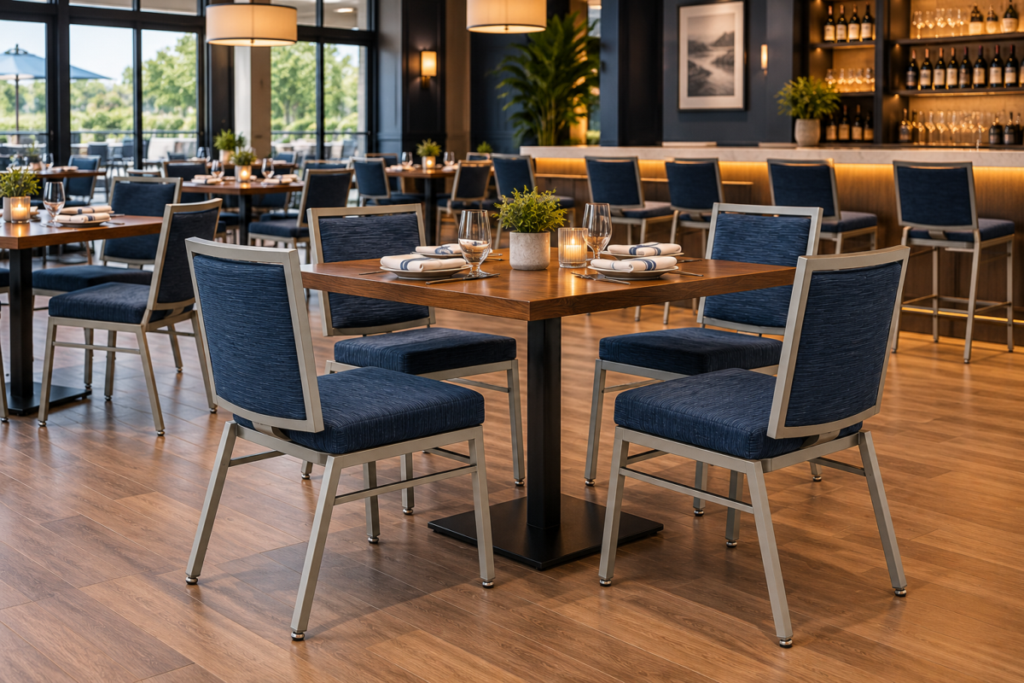
Choosing Durable, Easy-to-Clean Upholstery for Commercial Restaurant Chairs
Not all upholstery fabrics are designed for the same conditions.
Some materials emphasize stain resistance, while others focus on abrasion durability, moisture protection, or decorative appearance.
Restaurants should evaluate these characteristics together rather than choosing upholstery based on color or texture alone.
1. What Makes Restaurant Chair Upholstery Stain-Resistant?
Stain-resistant upholstery is designed to help reduce the absorption or visibility of certain spills and stains.
Depending on the material, this protection may come from the fabric’s fibers, surface treatments, coatings, or overall construction.
When comparing commercial upholstery options, consider these characteristics:
- Liquid repellency: Helps prevent certain liquids from immediately soaking into the fabric.
- Low absorbency: Can make some spills easier to remove before they penetrate the material.
- Cleanable surfaces: Allow appropriate food and beverage residue to be removed using approved cleaning methods.
- Colorfastness: Helps upholstery maintain its color during normal use and cleaning.
- Durable construction: Supports performance in busy dining environments.
It is important to remember that stain-resistant does not mean stain-proof.
Coffee, wine, sauces, grease, and other substances may still cause discoloration, particularly when spills are not addressed promptly.
Restaurant owners should request upholstery specifications and cleaning instructions before selecting a material.
Public Seating offers commercial-grade upholstery selections that allow hospitality businesses to compare options based on appearance, comfort, and practical requirements.
2. Which Upholstery Materials Are Best for Busy Restaurants?
The best upholstery material depends on a restaurant’s dining style, customer traffic, and maintenance needs.
A casual family restaurant may prioritize easy cleaning, while an upscale dining room may place greater emphasis on texture and decorative appearance.
Several upholstery categories are worth considering.
Performance upholstery fabrics
Performance fabrics are often designed with features that support stain resistance, durability, or easier maintenance.
These materials may provide the soft appearance of traditional upholstery while offering practical characteristics for commercial environments.
However, performance varies by fabric, so buyers should review the specific manufacturer’s claims and cleaning instructions.
Commercial vinyl upholstery
Vinyl can be a practical option for restaurants where spills occur frequently.
Its relatively smooth surface often allows food residue and certain liquids to be wiped away more easily than with absorbent woven materials.
Restaurants should still check the product’s cleaning requirements, durability specifications, and resistance to cracking or surface wear.
Synthetic woven fabrics
Certain polyester and other synthetic fabrics can offer useful abrasion resistance and attractive design options.
Their performance depends on the fiber construction, fabric backing, and any additional treatments.
Synthetic upholstery may be particularly appealing when a restaurant wants decorative patterns or textures that complement its interior design.
There is no single material that works best for every restaurant.
The goal is to find upholstery that provides the right combination of appearance, comfort, cleanability, and durability for the intended dining environment.
3. How Can Restaurants Tell Whether Upholstery Is Durable?
Restaurant owners should evaluate upholstery durability by reviewing manufacturer specifications and relevant fabric testing results.
A fabric that looks thick or feels sturdy is not necessarily designed for frequent commercial use.
One commonly referenced measurement is the Wyzenbeek abrasion test, described in ASTM D4157.
This test evaluates how upholstery withstands repeated rubbing under controlled laboratory conditions.
Results are commonly reported in double rubs, which provide a way to compare abrasion performance under the specified test conditions.
However, a higher abrasion rating does not guarantee that a fabric will last longer in every restaurant environment.
Other important factors include:
- Frequency of daily chair use
- Fabric construction and installation
- Resistance to staining and discoloration
- Cleaning products and maintenance practices
- Seam strength and upholstery quality
- Exposure to moisture, grease, and food residue
Restaurants should consider these characteristics together when comparing fabrics.
Public Seating offers upholstered commercial chairs with durable frame construction and supportive cushioning, allowing businesses to evaluate seating as a complete product rather than focusing only on fabric.
Requesting upholstery samples can also help buyers compare textures, colors, and cleaning requirements before placing a larger order.
4. How Should Restaurants Clean and Maintain Upholstered Chairs?
Restaurants should clean upholstered chairs according to the fabric manufacturer’s instructions and address spills as soon as practical.
Consistent maintenance helps preserve the appearance of seating and allows staff to identify damage before it becomes more extensive.
A simple cleaning routine can include the following steps.
Address spills promptly
When appropriate for the upholstery, gently blot liquid spills using a clean, absorbent cloth.
Avoid aggressive rubbing, which may spread stains or damage certain fabrics.
Inspect seating during daily cleaning
Check chair seats and backrests for crumbs, food residue, visible stains, and moisture.
Use cleaning products approved for the specific upholstery material.
Schedule periodic inspections
Look for fraying, damaged seams, loose upholstery, worn cushioning, and signs of deterioration.
These inspections also provide an opportunity to check chair frames, fasteners, and floor glides.
Understand upholstery cleaning codes
Common fabric cleaning codes include:
- W: Water-based cleaning methods
- S: Solvent-based cleaning methods
- W/S: Water-based or solvent-based methods, as permitted
- X: Vacuuming or light brushing only
These codes provide general guidance, but the manufacturer’s specific care instructions should always take priority.
Restaurant owners should never assume that bleach, harsh disinfectants, or abrasive cleaners are suitable for every upholstery material.
Following the recommended maintenance procedures can help preserve the appearance and condition of commercial restaurant seating.
5. How Do You Balance Stain Resistance With Comfort and Restaurant Design?
The right restaurant chair upholstery should be practical to maintain while providing a comfortable and attractive dining experience.
Easy cleaning is important, but seating should also complement the restaurant’s atmosphere and encourage guests to feel comfortable throughout their meals.
Consider three important factors.
Comfortable cushioning
Upholstery works together with seat padding and backrest design to influence comfort.
Commercial chairs with supportive cushioning can provide a more enjoyable seating experience during extended meals.
Appropriate colors and patterns
Medium tones, textured fabrics, and subtle patterns may help make minor everyday marks less noticeable between cleanings.
Darker colors can complement intimate dining environments, while lighter tones may help create an open, airy appearance.
However, color alone does not determine how resistant a fabric is to staining.
Coordinated interior design
Chair upholstery should complement dining tables, flooring, wall finishes, and lighting.
Before purchasing, review physical fabric samples inside the restaurant whenever possible.
Lighting can significantly influence how colors and textures appear, particularly in dining rooms with warm or dim illumination.
Public Seating offers upholstered commercial seating with fabric and frame finish options that can complement a variety of hospitality interiors.
Choosing materials that balance appearance and everyday practicality helps restaurants create spaces that remain welcoming through regular use.
Frequently Asked Questions About Stain-Resistant Restaurant Chair Upholstery
What is the easiest upholstery material to clean in a restaurant?
Commercial vinyl is often easy to wipe clean because of its relatively smooth surface. However, cleaning requirements vary by product, so restaurants should always review manufacturer instructions.
Is stain-resistant upholstery waterproof?
Not necessarily. Stain-resistant upholstery may help reduce the absorption of certain spills, but it does not automatically mean the material or entire chair is waterproof.
How often should restaurants clean upholstered chairs?
Restaurants should inspect seating regularly and address visible spills promptly. More thorough cleaning should follow the upholstery manufacturer’s recommendations and reflect the restaurant’s level of use.
Does stain-resistant upholstery last longer than regular fabric?
Not automatically. Stain resistance and abrasion durability are separate characteristics. Restaurant owners should evaluate both when selecting commercial upholstery.
Find Comfortable, Easy-to-Maintain Restaurant Seating at Public Seating
Choosing stain-resistant restaurant chair upholstery is about more than keeping furniture looking clean. It involves selecting materials that support daily restaurant operations, provide guest comfort, and complement the overall dining environment.
By comparing stain resistance, abrasion durability, cleaning requirements, and design options, restaurant owners can make informed seating decisions that meet their business needs.
At Public Seating, we offer commercial seating options designed for hospitality environments, with upholstered chair styles and finishes that accommodate different restaurant interiors.
Ready to upgrade your restaurant seating?
Contact Public Seating today to explore commercial restaurant chairs and discuss upholstery options that combine comfort, attractive design, and practical everyday maintenance.