
Is It Cheaper to Invest in Quality Commercial Seating or Keep Replacing Cheap Furniture?
For most restaurants and commercial spaces, investing in quality commercial seating is more cost-effective over time than repeatedly replacing cheap furniture. Higher-quality seating typically offers stronger construction, better durability, easier maintenance, and longer useful life. Although the upfront price is higher, fewer replacements, repairs, disruptions, and disposal costs can lower the total cost of ownership.
Public Seating helps restaurants, hospitality businesses, offices, and other commercial spaces choose furniture designed for the demands of real-world use. Instead of focusing only on the initial price tag, we help customers consider durability, comfort, appearance, maintenance, and long-term value. The right seating should fit your space and budget today while continuing to perform as customers and employees use it day after day. When furniture is treated as a long-term business investment rather than a short-term purchase, quality becomes easier to evaluate and the true cost of inexpensive furniture becomes much clearer.
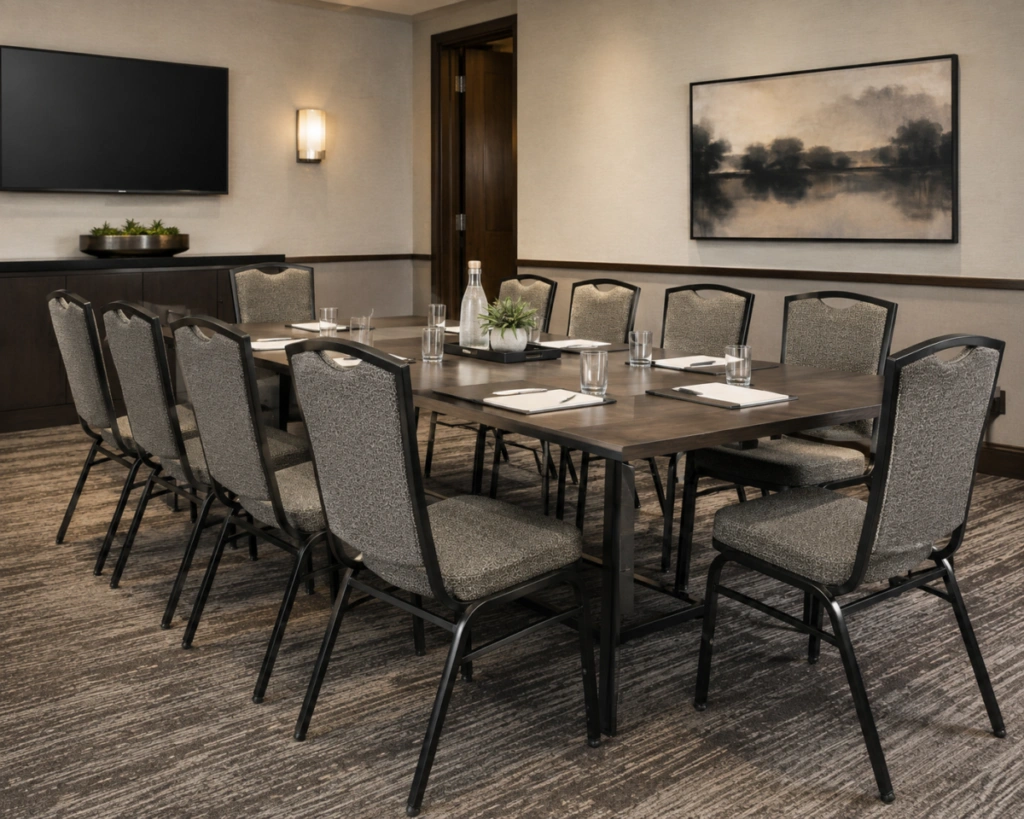
Why Quality Commercial Seating Can Cost Less Over Time
The most useful way to compare quality seating with inexpensive alternatives is total cost of ownership, not purchase price alone. Total cost includes what you spend to buy, maintain, repair, replace, remove, and dispose of furniture throughout its useful life.
A $70 chair is not necessarily less expensive than a $180 chair if the cheaper chair needs to be replaced several times while the higher-quality chair remains in service.
For example, consider a hypothetical 50-chair dining room:
- Replacing $70 chairs three times costs $10,500 in chair purchases.
- Buying $180 chairs once costs $9,000.
- The replacement scenario can also create additional costs for shipping, assembly, disposal, staff time, and operational disruption.
Actual costs and furniture lifespans vary, but the example illustrates why purchase price alone can be misleading.
Why Does Commercial-Grade Seating Last Longer?
Commercial-grade seating is designed around the heavier and more frequent use found in restaurants, waiting areas, cafeterias, hospitality venues, and other public spaces.
One useful benchmark is BIFMA, the Business and Institutional Furniture Manufacturers Association. BIFMA develops voluntary standards addressing commercial furniture performance, including safety and durability. Its ANSI/BIFMA X5.4 standard specifically covers public and lounge seating used in settings that include restaurants, dining areas, and cafeterias.
When evaluating seating, look beyond its appearance. Important indicators of long-term value can include:
- Strong frames and reinforced joints
- Commercial-grade upholstery or finishes
- Appropriate weight capacity
- Durable glides and hardware
- Easy-to-clean surfaces
- Replaceable components
- Construction intended for frequent use
- Relevant commercial furniture testing or certifications
A chair can look attractive online and still be poorly suited to hundreds of seating cycles in a busy commercial environment.
How Do You Calculate the True Cost of Cheap Furniture?
Calculate cost per year of useful service, then add expenses associated with maintenance and replacement.
A simple starting formula is:
Purchase price ÷ years of useful service = annual furniture cost
Suppose Chair A costs $80 and lasts two years, while Chair B costs $200 and lasts eight years.
Chair A costs about $40 per year before replacement-related expenses. Chair B costs $25 per year. In this simplified example, the chair that costs 2.5 times more initially actually costs less per year of service.
Businesses should also consider:
- Freight and delivery for replacement orders
- Assembly or installation labor
- Repairs and replacement parts
- Staff time spent managing furniture problems
- Disposal costs
- Lost use while damaged seating is unavailable
- The difficulty of matching discontinued furniture
There can also be accounting considerations. The IRS states that qualifying business furniture can be depreciable property when it has a determinable useful life and is expected to last more than one year. Businesses should consult a tax professional about how current depreciation rules apply to their specific purchases.
When Is Paying More for Commercial Seating Worth It?
Paying more is generally worth considering when seating will experience frequent use, when furniture is important to the customer experience, or when replacement would be disruptive.
Restaurants are a clear example. Chairs may be moved, bumped, cleaned, stacked, dragged, and occupied by many different guests every day. A residential or occasional-use chair may not be designed for that environment.
Quality seating can be especially valuable in:
- Restaurants and cafés
- Bars and hospitality venues
- Waiting and reception areas
- Break rooms and cafeterias
- Conference and training rooms
- Educational and institutional spaces
- High-traffic public areas
Comfort also matters. Guests may not know the manufacturer or construction method of a chair, but they quickly notice wobbling, damaged finishes, torn upholstery, or uncomfortable seating.
For customer-facing businesses, furniture is part of the physical experience of the brand. Keeping that experience consistent can make durability worth paying for.
Does Buying Durable Furniture Reduce Waste?
Keeping furniture in service longer can help reduce the frequency at which products enter the waste stream.
The U.S. Environmental Protection Agency reports that furniture and furnishings accounted for approximately 12.1 million tons of municipal solid waste generation in 2018. Of that amount, about 80.1% was landfilled.
EPA guidance for commercial buildings also identifies waste prevention as an effective way to reduce waste and notes that reuse and refurbishment can prolong the useful life of furniture and other products.
That makes longevity an important consideration beyond cost. Choosing durable products, maintaining them properly, repairing them when practical, and replacing individual components instead of entire pieces can help businesses get more value from the materials they purchase.
What Should You Look for Before Investing in Quality Seating?
The best commercial chair is not simply the most expensive one. It is the chair whose construction, materials, design, and expected lifespan match how your business will actually use it.
Before purchasing, ask:
- Is it intended for commercial use? Residential furniture may not be built for the same usage levels.
- How is the frame constructed? Examine materials, joints, welds, fasteners, and reinforcement.
- Is the finish appropriate for the environment? Consider cleaning frequency, spills, moisture, sunlight, and everyday wear.
- Can components be replaced? Replaceable glides, seats, upholstery, or hardware may extend useful life.
- Is it comfortable for the expected visit length? A quick-service restaurant and a fine-dining restaurant may have very different seating needs.
- Does it have appropriate testing information? Recognized commercial furniture standards can provide useful evidence of performance.
- Will the design age well? A durable, versatile style may reduce pressure to replace furniture simply because it looks dated.
The goal is not to spend more automatically. It is to spend strategically on seating that delivers the right combination of durability, comfort, maintenance, style, and lifecycle value.
Frequently Asked Questions About Quality Commercial Seating
Is commercial-grade furniture worth the extra cost?
Commercial-grade furniture is often worth the additional upfront cost in high-use environments because it is designed with durability, safety, and repeated use in mind. The best comparison is total ownership cost over the expected service life, rather than purchase price alone.
How often should restaurant chairs be replaced?
There is no universal replacement schedule. Restaurant seating should be inspected regularly and replaced or repaired when structural integrity, stability, comfort, appearance, or cleanability no longer meets the needs of the business.
What is the difference between commercial and residential seating?
Commercial seating is intended for business or public environments where furniture can experience heavier and more frequent use. Relevant commercial standards, such as ANSI/BIFMA X5.4 for public and lounge seating, provide test methods for evaluating areas such as safety, durability, and structural adequacy.
How can businesses make commercial furniture last longer?
Choose furniture appropriate for the environment, clean it according to manufacturer recommendations, tighten hardware when needed, use appropriate floor glides, address damage promptly, and replace worn components before minor problems become major failures.
Invest in Seating That Works as Hard as Your Business
Cheap furniture can solve an immediate budget problem, but repeated replacement can turn a low purchase price into a high long-term expense. Quality commercial seating gives businesses an opportunity to reduce replacement cycles while creating a more consistent, comfortable, and professional environment.
Public Seating can help you compare options based on how your space actually operates, from durability and maintenance to comfort, style, and long-term value.
Ready to invest in commercial seating built for the demands of your business? Contact Public Seating to find the right solution for your space.