
What Custom Seating Options Work Best for Unique Hospitality Spaces?
The best custom seating options for unique hospitality spaces combine commercial-grade durability with choices in upholstery, finishes, dimensions, frame styles, and seating configurations. Restaurants, hotels, lounges, event venues, and other hospitality businesses can use customized seating to solve unusual space constraints, reinforce their brand, improve guest comfort, and create a more cohesive interior without sacrificing everyday functionality.
Public Seating understands that hospitality spaces are rarely one-size-fits-all. A boutique hotel lobby has different seating requirements than a busy restaurant, private dining room, or event venue. Our approach is centered on helping businesses find commercial seating that complements their design while standing up to frequent use. By considering aesthetics, comfort, traffic flow, maintenance, and durability together, hospitality operators can select seating that feels intentional rather than simply filling an empty space. Whether the goal is coordinating upholstery with an established color palette or finding seating that works within an unconventional layout, thoughtful customization can help turn practical furniture into an important part of the guest experience.
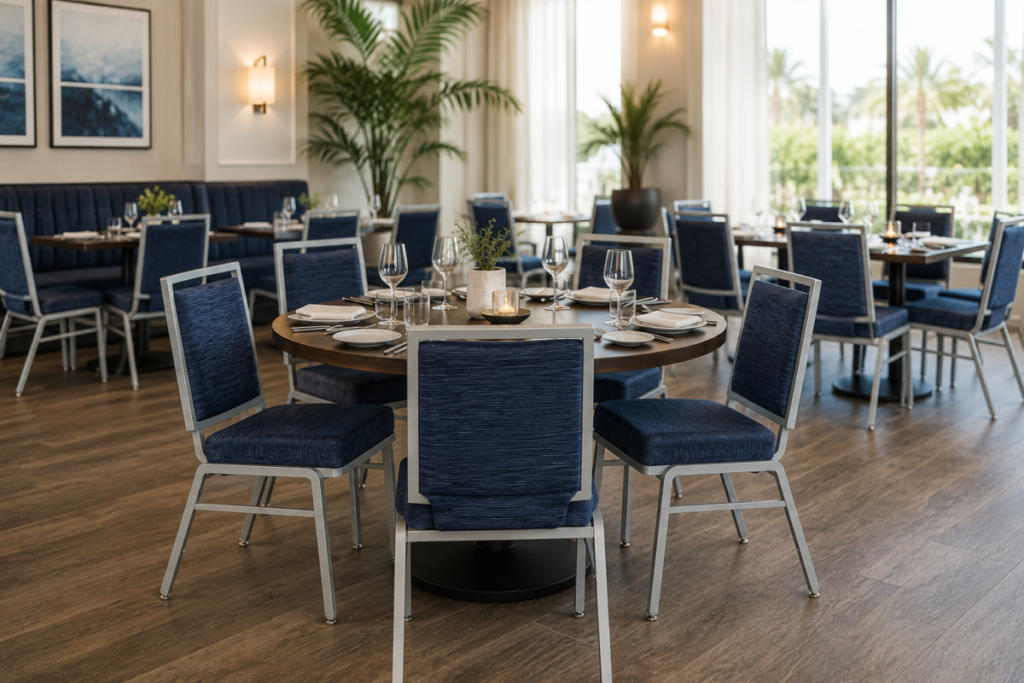
Custom Hospitality Seating That Balances Style and Function
Custom hospitality seating works best when design decisions begin with how the space will actually be used. Color and style matter, but commercial environments also need furniture that supports guest comfort, efficient service, cleaning, accessibility, and repeated daily use.
BIFMA’s ANSI/BIFMA X5.4-2020(R2025) standard covers public and lounge seating used in spaces including restaurants, dining areas, cafeterias, reception areas, and other gathering spaces. BIFMA says the standard addresses the safety, durability, and structural adequacy of public seating products.
That makes commercial performance an important starting point when customizing furniture for hospitality environments.
What Parts of Hospitality Seating Can Be Customized?
Depending on the seating product and manufacturer, customization can extend well beyond choosing a chair color. The available options may allow designers and operators to coordinate furniture with both the visual identity and functional needs of a space.
Common custom seating options include:
- Upholstery fabrics, vinyls, and performance materials
- Fabric colors, patterns, and textures
- Wood stains and finishes
- Metal frame finishes
- Seat and back combinations
- Chair and barstool styles
- Seat heights and dimensions
- Coordinating seating across different areas
- Configurations suited to particular layouts
Start by identifying the elements that matter most to the guest experience. A hotel may prioritize a coordinated look across a lobby, dining area, and event space, while a restaurant may be more concerned with durability, cleanability, seat comfort, and maximizing its dining layout.
Customization should solve a design or operational problem, not simply add decorative choices.
How Can Custom Seating Help With an Unusual Floor Plan?
Custom seating can help challenging hospitality spaces use available square footage more intentionally. The key is choosing furniture according to traffic patterns, table configurations, service requirements, and the way guests move through the room.
For example, a narrow restaurant may benefit from seating with a compact footprint, while a large hotel lobby may require a mixture of seating types to create smaller conversation zones. Flexible event spaces may need lightweight or stackable seating that can be rearranged efficiently.
Before choosing furniture, evaluate:
- Traffic flow: Leave appropriate routes for guests and employees.
- Table spacing: Account for chairs when they are occupied, not just pushed under tables.
- Service patterns: Consider how servers, housekeeping teams, or event staff move through the space.
- Room changes: Determine whether furniture will frequently be moved or reconfigured.
- Accessible areas: Make accessibility part of the layout from the beginning.
Accessibility is particularly important in restaurants and dining environments. The ADA Standards require at least 5 percent of seating and standing spaces at dining surfaces to comply with accessibility requirements, with compliant spaces dispersed throughout the facility where dining surfaces are provided. Federal accessibility requirements should be reviewed carefully when planning a hospitality layout.
How Does Custom Seating Strengthen a Hospitality Brand?
Custom seating can reinforce a hospitality brand by repeating its visual language throughout the physical environment. Materials, shapes, textures, colors, and finishes all influence how guests perceive a space.
Consider a sophisticated restaurant built around dark woods, warm lighting, and understated colors. A generic chair in an unrelated finish may interrupt that design. Seating selected with complementary upholstery and finishes can make the entire environment feel more cohesive.
Customization can support different brand identities:
- Boutique hotels: Distinctive fabrics and finishes can create a memorable, curated atmosphere.
- Upscale restaurants: Coordinated materials can support a polished dining experience.
- Casual restaurants: Durable, approachable seating can reinforce an energetic and welcoming atmosphere.
- Event venues: Versatile seating can work with different themes and room configurations.
- Lounges: Upholstered seating can create comfortable areas that encourage guests to stay longer.
The goal is consistency without monotony. Custom seating should feel like a natural part of the overall interior rather than an isolated design feature.
What Should Hospitality Businesses Prioritize When Choosing Custom Seating?
Durability, comfort, maintenance, and design compatibility should all be considered before finalizing custom seating.
Hospitality furniture experiences conditions that residential furniture generally does not. Chairs may be used by many guests each day, moved repeatedly, cleaned frequently, and exposed to spills, impacts, and other everyday wear.
BIFMA’s current public and lounge seating standard specifically includes restaurant, dining, and cafeteria settings, making recognized commercial furniture standards a useful reference when evaluating seating intended for public environments.
Before ordering, ask these practical questions:
- Is the seating intended for commercial use?
- Will the upholstery withstand the expected cleaning routine?
- Are finishes appropriate for a high-traffic environment?
- Is the seat comfortable for the typical length of a guest’s visit?
- Can staff move the furniture easily when necessary?
- Does the furniture complement the tables and surrounding décor?
- Are relevant commercial performance standards or testing available?
- Will the design still make sense if the space evolves?
These questions help businesses avoid choosing seating based solely on appearance.
When Is Custom Seating Worth the Investment?
Custom seating is particularly valuable when standard furniture cannot adequately meet a space’s design, branding, or operational requirements.
It may be worth considering custom options when:
- Your hospitality concept has a distinctive visual identity.
- Standard finishes clash with the existing interior.
- Multiple areas need coordinated seating.
- The floor plan presents unusual challenges.
- Guest comfort is a major part of the experience.
- Furniture must support frequent room reconfiguration.
- You want seating to contribute to a recognizable brand aesthetic.
Not every component needs to be completely custom. In many cases, selecting an established commercial chair and customizing upholstery, frame finish, or other available features provides the right balance between individuality and practicality.
Frequently Asked Questions About Custom Hospitality Seating
What is custom hospitality seating?
Custom hospitality seating is commercial furniture selected or produced with specific design or functional options for restaurants, hotels, lounges, event venues, and similar spaces. Customization may include upholstery, colors, finishes, materials, dimensions, or configurations, depending on the product.
Is custom seating only for luxury hotels and restaurants?
No. Custom seating can benefit any hospitality business that needs furniture to meet particular aesthetic, operational, or space requirements. Even simple choices such as selecting a specific upholstery or frame finish can create a more coordinated environment.
How do I choose upholstery for commercial seating?
Choose upholstery based on appearance, durability, cleaning requirements, and the conditions in which it will be used. Hospitality businesses should pay particular attention to performance specifications and manufacturer care recommendations rather than choosing fabric based on appearance alone.
Should restaurant seating be commercial grade?
Yes, seating used in high-traffic restaurants should be selected for the demands of a commercial environment. BIFMA’s public and lounge seating standard specifically covers restaurant, dining, and cafeteria seating and evaluates areas including safety, durability, and structural adequacy.
Create Seating That Fits Your Hospitality Space
Unique hospitality spaces deserve seating chosen with the same attention given to lighting, décor, layout, and other defining design elements. Custom seating options can help businesses bring those elements together while addressing practical needs such as durability, comfort, maintenance, accessibility, and space efficiency.
Public Seating can help you explore commercial seating options that complement your concept and support the way your hospitality space operates every day.
Ready to create a more distinctive hospitality space? Contact Public Seating to explore custom seating options for your business.