
What Is the Best Seating for a Fast Food Restaurant?
The best seating for a fast food restaurant combines commercial-grade durability, easy-to-clean surfaces, space-efficient dimensions, and enough comfort for an enjoyable meal. Quick-service restaurant seating should withstand frequent daily use and spills while allowing staff to clean tables and chairs quickly. The goal is seating that supports fast operations without making customers feel rushed or uncomfortable.
Public Seating understands that fast food and quick-service restaurants have unique demands. Seating in these environments may serve a steady flow of customers throughout the day, which means furniture has to work just as hard as the restaurant team. Public Seating provides commercial seating solutions designed around durability, functionality, comfort, and style. From compact dining chairs to stools and other space-conscious options, the right furniture can help operators make better use of their dining rooms while creating an inviting place to enjoy a meal. Because quick service should describe the speed of the experience, not the quality of the seating.
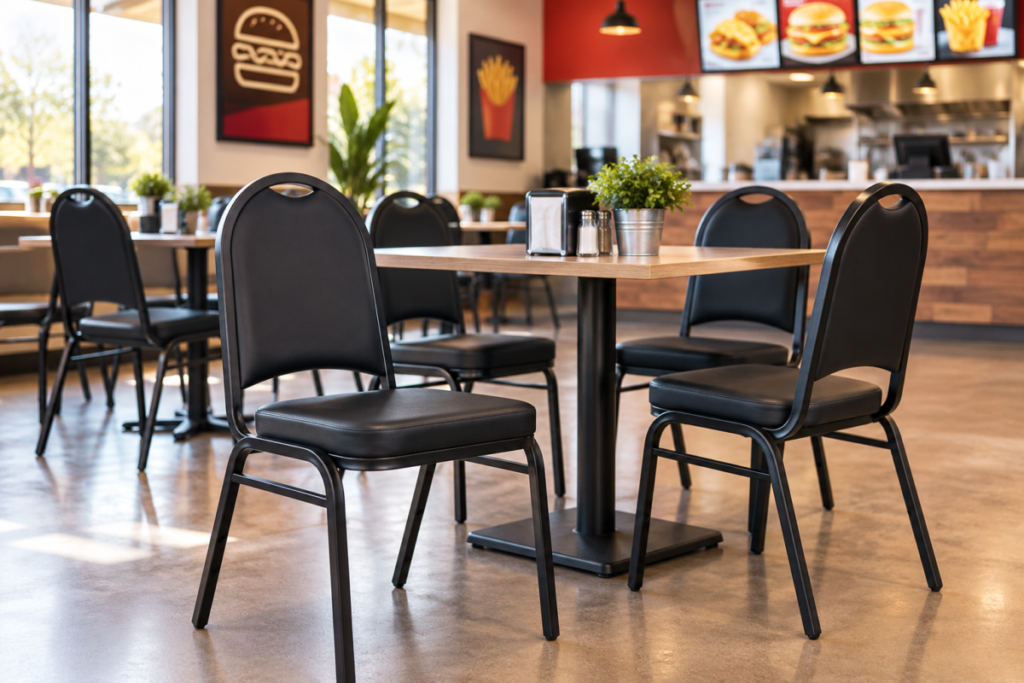
Choosing Comfortable, Durable Seating for Quick-Service Restaurants
Fast food restaurant seating should support three priorities at the same time: efficient operations, long-term durability, and guest comfort. Sacrificing one for another can create unnecessary problems, from difficult cleaning and premature replacement to a dining room customers would rather avoid.
That balance matters as quick-service dining continues to evolve. According to the National Restaurant Association’s 2025 State of the Restaurant Industry research, 47% of limited-service customers said the dining experience is more important than the price of the meal. Even in a speed-focused restaurant format, the experience still matters.
What Makes a Good Fast Food Restaurant Chair?
A good fast food restaurant chair is durable, easy to maintain, appropriately sized for the floor plan, and comfortable enough for the restaurant’s typical dining experience. Commercial-grade construction is especially important because restaurant furniture faces much more frequent use than residential furniture.
When evaluating fast food seating, operators should consider:
- Durable construction: Frames, seats, backs, and connection points should be designed for commercial use.
- Easy-care materials: Smooth, nonporous, or otherwise easily maintained surfaces can simplify routine cleaning.
- Compact dimensions: Space-efficient chairs can help operators use available dining space effectively.
- Comfort: A supportive seat and back can make even a relatively short meal more enjoyable.
- Stable construction: Chairs should feel secure when guests sit down, stand up, or reposition them.
- Cohesive style: Seating should reinforce the restaurant’s colors, materials, and overall brand experience.
Restaurant owners should also consider the complete lifecycle of the furniture. A chair that initially costs less but needs frequent repairs or early replacement may not provide the same long-term value as durable commercial seating.
Why Are Quick-Clean Surfaces So Important in Fast Food Restaurants?
Quick-clean surfaces help restaurant teams reset seating faster between customers and maintain a consistently inviting dining room. In a high-traffic quick-service restaurant, complicated upholstery, difficult crevices, or materials requiring specialized care can slow down routine cleaning.
Look for seating materials and designs that allow staff to address crumbs and spills efficiently. Depending on the restaurant concept, that could mean smooth seat surfaces, durable finishes, or commercial upholstery selected for easier maintenance.
Chair design matters, too. Ornate details may look attractive, but excessive grooves and hard-to-reach areas can create additional cleaning work.
When evaluating a chair, ask practical questions:
- Can staff wipe the seat and back efficiently?
- Are there difficult areas where food and debris could collect?
- How should the material be cleaned and maintained?
- Can the finish tolerate the manufacturer’s recommended routine cleaning process?
- Are replacement parts or components available if the chair is damaged?
A chair should make daily restaurant operations easier, not create another maintenance challenge.
How Can Fast Food Seating Maximize Dining Room Space?
Space-efficient seating can help a quick-service restaurant accommodate guests without making the dining room feel unnecessarily crowded. Compact chairs, appropriately sized tables, and a thoughtful mix of seating types can make valuable floor space work harder.
This has become particularly important as quick-service restaurants rethink how much space they devote to dine-in versus takeout traffic. National Restaurant Association research reported that off-premises traffic represented 83% of limited-service restaurant traffic in 2024, up from 76% in 2019. The Association also reported that 40% of limited-service operators had made changes to interior spaces or parking lots to accommodate off-premises orders.
That shift does not make dine-in seating unimportant. It makes thoughtful space planning even more valuable.
Operators may want to consider a mix such as:
- Compact two-person tables that can be combined for larger parties
- Standard-height chairs for flexible dining areas
- Counter or bar-height seating where appropriate
- Wall-adjacent seating to use perimeter space efficiently
- Flexible tables and chairs that can adapt to changing traffic patterns
Avoid simply fitting as many chairs as possible into the room. Customers and employees still need appropriate circulation space, and restaurant layouts must meet applicable accessibility and building requirements.
The U.S. Access Board’s ADA Standards state that at least 5% of seating and standing spaces at dining surfaces must comply with applicable accessible dining-surface requirements. Accessible dining surfaces are also required to be dispersed throughout the dining space or facility.
Does Comfortable Seating Really Matter in a Fast Food Restaurant?
Yes. Fast service and comfortable seating are not mutually exclusive. Guests may stay for a shorter period than they would in a fine-dining restaurant, but they still expect a clean, welcoming, and comfortable place to enjoy their food.
Comfort does not necessarily require oversized cushions or lounge-style furniture. In a quick-service environment, it can come from basics such as:
- A supportive seat and back
- Appropriate seat height
- Stable construction
- Enough personal space around the table
- Comfortable table-to-chair proportions
- A dining layout that does not feel cramped
This is especially relevant as restaurants compete with the convenience of drive-thru, delivery, and takeout. The National Restaurant Association reported in 2025 that nearly 75% of all restaurant traffic occurs off-premises. When customers choose to come inside and eat, the physical environment becomes part of what distinguishes that experience.
Comfortable commercial seating helps reinforce the idea that dining in is worth the stop.
How Should Fast Food Restaurants Balance Durability and Style?
Choose seating that meets operational requirements first, then select finishes, colors, and shapes that support the restaurant’s visual identity. Attractive furniture provides little value if it cannot handle the realities of a busy restaurant.
Fortunately, durability does not have to mean a generic dining room. Commercial seating can reinforce a brand through frame finishes, upholstery, materials, chair silhouettes, and coordinated seating styles.
For example, a modern quick-service concept might choose streamlined metal-frame chairs with clean lines. A fast-casual restaurant aiming for a warmer atmosphere might incorporate wood-look finishes or upholstered accents where appropriate.
The best choice is one that still looks intentional after repeated use. Think beyond opening day and consider how the seating will perform, clean, and fit the restaurant’s brand over time.
Frequently Asked Questions About Fast Food Restaurant Seating
What type of chairs are best for fast food restaurants?
Commercial-grade chairs with durable construction, easy-care surfaces, compact dimensions, and supportive designs are generally well suited to fast food restaurants. The ideal chair should fit the restaurant’s traffic level, floor plan, maintenance routine, and brand.
How much space should a fast food restaurant leave around seating?
The right spacing depends on the layout, table dimensions, seating style, applicable codes, and accessibility requirements. Restaurants should provide sufficient room for guests and staff to circulate safely rather than maximizing chair count at the expense of movement and accessibility.
Should fast food restaurant chairs be upholstered?
They can be, but upholstery should be chosen carefully for a high-traffic environment. Operators should consider durability, stain resistance, maintenance requirements, and how quickly the material can be cleaned between guests.
Is restaurant seating different from residential furniture?
Yes. Commercial restaurant seating is intended for the demands of business environments, where chairs can experience frequent use throughout the day. Restaurant owners should choose products designed and rated for their intended commercial application.
Fast Food Can Be Quick and Comfortable
Fast food seating has a demanding job. It needs to stand up to frequent use, help employees keep the dining room clean, make efficient use of limited floor space, and provide customers with a comfortable place to enjoy their meals.
That is why the best fast food seating is not chosen on appearance alone. Durability, cleanability, space efficiency, comfort, and style should work together.
Ready to find commercial seating that can keep up with your quick-service restaurant? Contact Public Seating to explore durable, comfortable seating options for your space.